
The verification tax is eating AI’s savings.
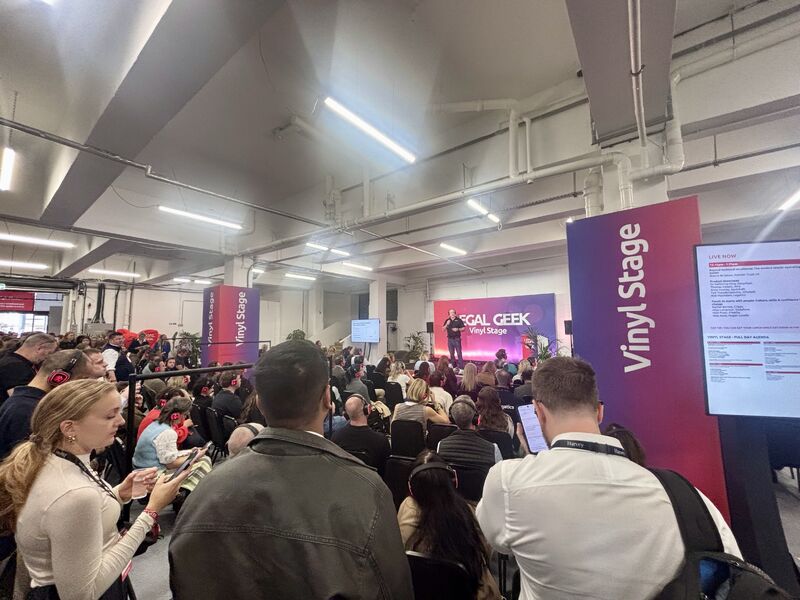
That was my message a packed Legal Geek room today.
Clients can’t see it, so they assume the worst.
Generative AI has been mainstream in legal for almost four years, and it has only had real traction inside firms for about two. That isn’t long.
I don’t think firms deserve all the criticism they’re getting but they should be proactively talking to customers.
We know from the Deloitte study in June that these conversations aren't happening like they should.
67% of GCs report either no conversation at all or just an initial one.
GCs and CLOs now have a mandate from their CEOs and CFOs to show AI savings.
They have two ways to deliver it.
They can tool up and keep some work in-house, or they can work it out with their panel firms.
The second path is stuck, and one reason is transparency.
Firms have spent heavily on platforms, licenses, and new innovation and legal engineering roles.
The cost gains are difficult to articulate, partly because of the verification tax.
Every AI output still needs a lawyer to check it, and that time stays on the bill.
Clients can’t see any of this, so they use whatever evidence they have.
The New York Times reported clients citing firms’ own AI press releases in fee negotiations and asking for 20 to 30% off.
Law.com reports that the big banks want proof AI efficiencies show up in their bills, while firms argue their AI spend cancels out the savings.
Neither side can settle that argument without looking at the same data. It’s also starting to decide who gets hired.
A LegalTechTalk report says HSBC plans to make AI use a criterion when selecting outside counsel.
If firms decide alone what to disclose, they’ll probably build something clients might not use.
If clients set demands alone, they’ll ask for things firms can’t credibly produce.
This only works if both sides design it together.
That’s why Reena SenGupta and I brought GCs and law firm leaders into one room yesterday in London to have that conversation.
Her post on the event is here: https://lnkd.in/p/ge6U8ejV
We plan to run many more of these.
Firm leaders: what would you be comfortable showing a client today about how AI was used on their matters and the related economics?
First published on LinkedIn. Read the thread and replies.
Ted Theodoropoulos is CEO and co-founder of Infodash and hosts the Legal Innovation Spotlight podcast. He writes about legal AI strategy, law firm technology, and the economics of the law firm business model.